Role: Lead Product Designer
Duration: 2 months
Mynu App
Role: Lead Product Designer
Duration: 2 months
The rise of artificial intelligence changed the rules of digital product design. Methodologies that for years shaped my work, like the double diamond, started to fall short next to tools that can generate in hours what used to take weeks. Integrating AI into the process stopped being a curiosity and became a necessity.
In that search I came across the Stingray model by Board of Innovation, which proposes a new way of understanding collaboration between people and AI. This case shows how I brought that model into a real project: turning research findings into a functional prototype, testing it with users, and using it to define an MVP.
Client Context
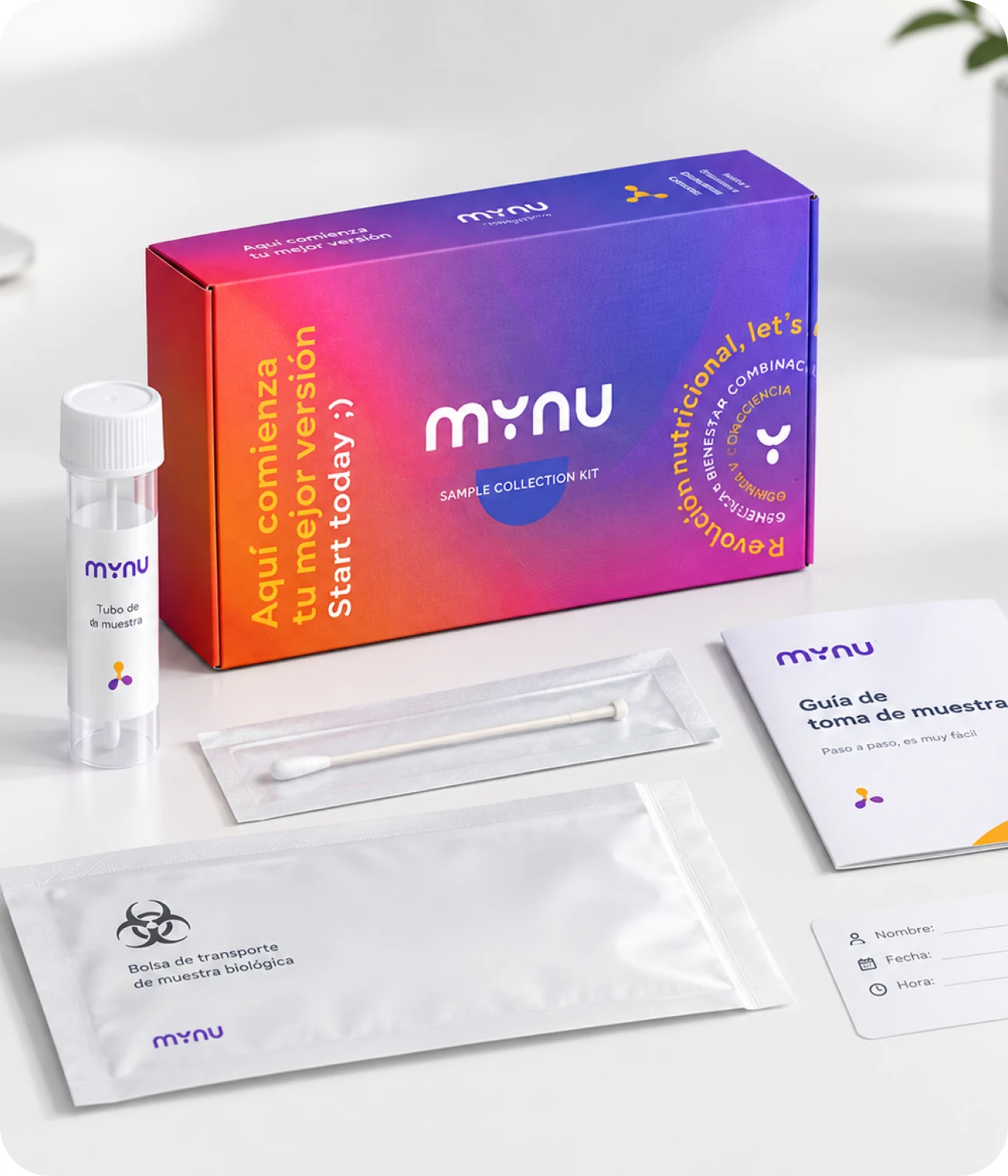
Mynu is a Chilean personalized nutrition service that analyzes each person’s DNA from a saliva sample and delivers food and habit recommendations through an app.
At the time of the project, the service was already operating, but users perceived it as a genetic report, even though it offered much more. Its goal was to go one step further: to become a nutrition coach that accompanies people in their daily lives.

The Challenge
A valued but little-used product. The prior research, which combined benchmarking, expert analysis, analytics, surveys, and interviews, confirmed a retention problem with a clear cause: users valued their genetic results but couldn’t turn them into concrete habits. The app informed, but it didn’t accompany.
The numbers reflected it:
A process that made people wait. In a traditional flow, going from findings to a testable prototype takes weeks. During that time, neither the client nor the users can experience the proposed improvements, and wireframes only offer a limited approximation of the final experience.
Study results are confidential.
The Solution
To respond to both challenges, Agencia Match offered a new service: turning research findings into a functional prototype generated with AI, usable and interactive from the earliest stages. As Lead Product Designer, it fell to me to give shape to that promise and turn it into a concrete working process.
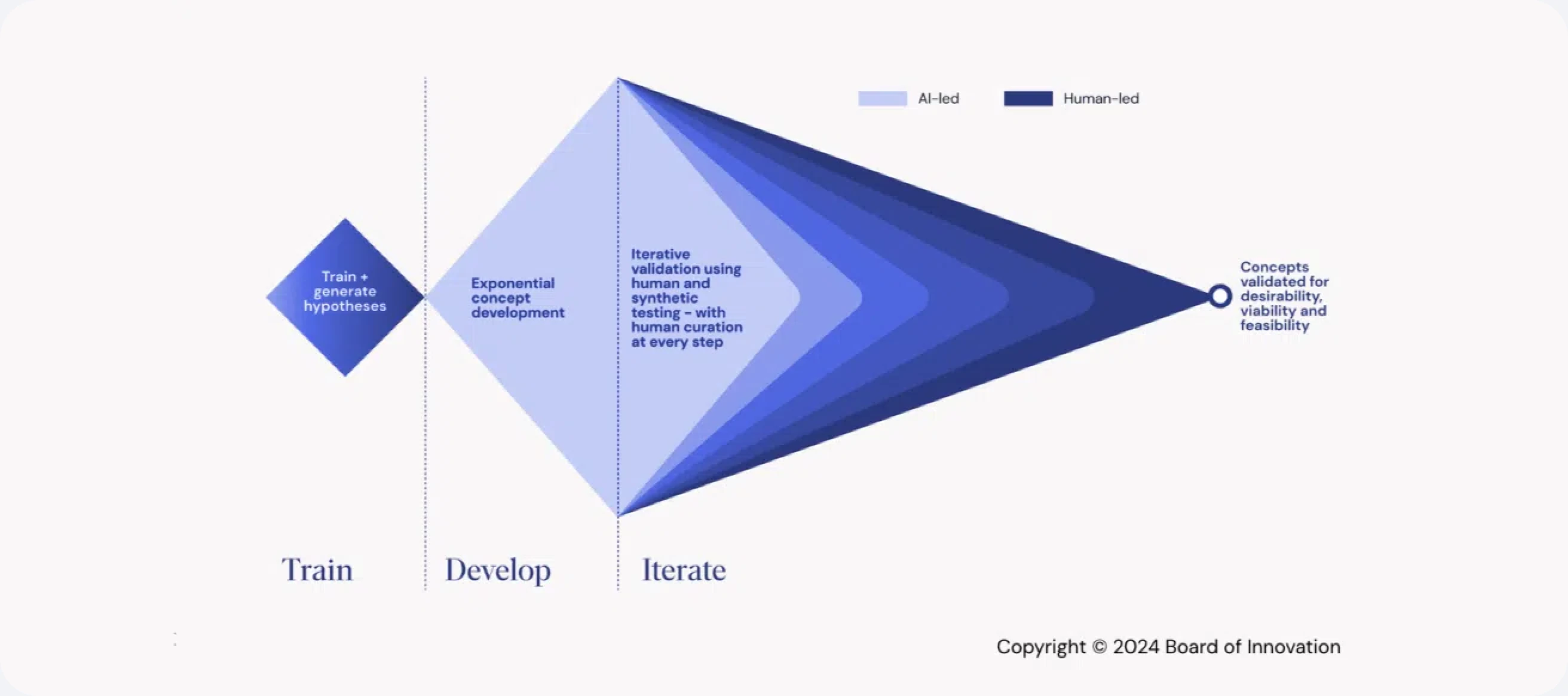
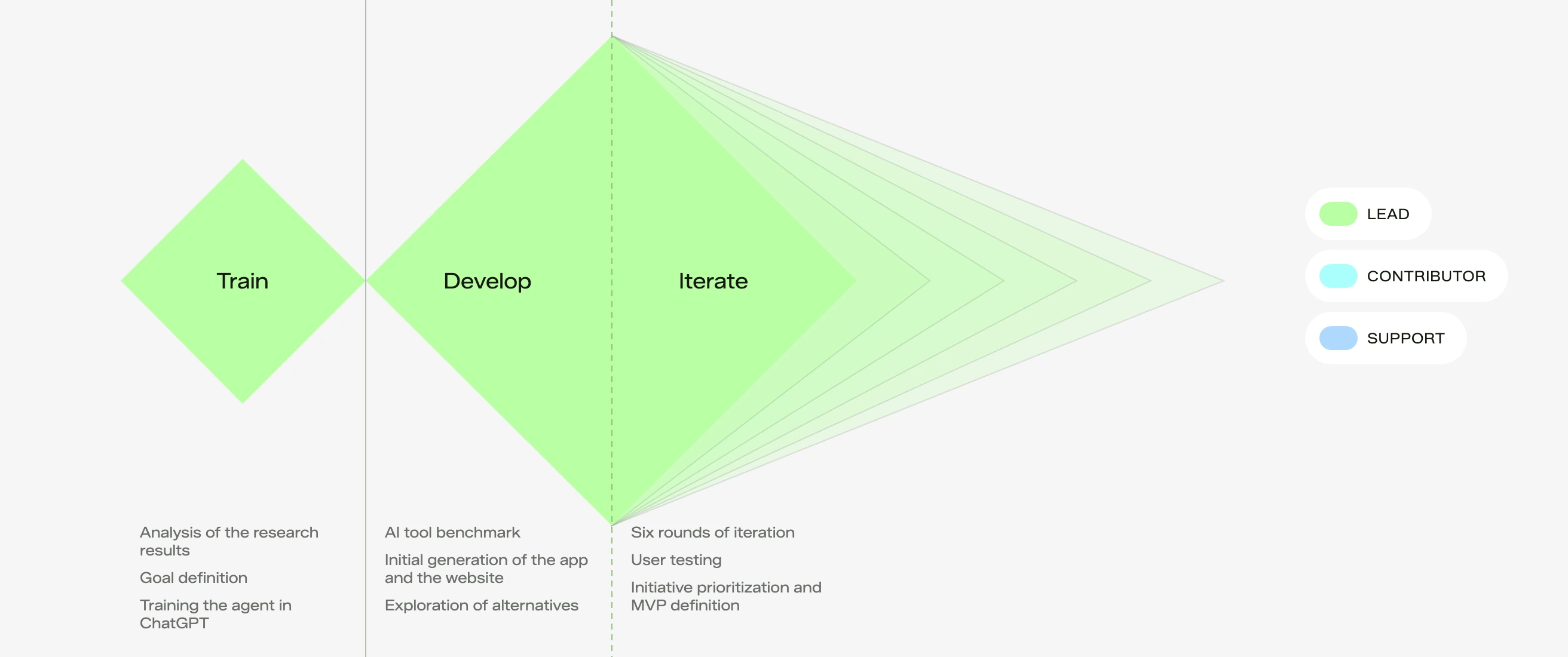
The challenge was defining how to integrate AI without losing design judgment: which tasks to delegate, which decisions to keep within the team, and how to make sure what was generated responded to real problems. To structure it, I took the Stingray model as a base and adapted it to the project’s reality in three phases:
01
Train, Research as training.
I turned the findings, user personas, and user journeys into the context to train an agent on the project’s goals.
02
Develop, Generative exploration.
I used AI to generate interfaces and alternatives in parallel, widening the creative space before converging.
03
Iterate, Validation and prioritization.
I evolved the prototype through six main rounds of iteration, we tested it with users, and we used it to define a viable MVP.
The prototype addressed all the findings of the report and went deeper into goal setting, meal logging, the organization of the DNA results, the findability and comprehension of tips by category, and the connection with wearables.
Process and My Contribution
Phase by Phase
lead
Train, From findings to context
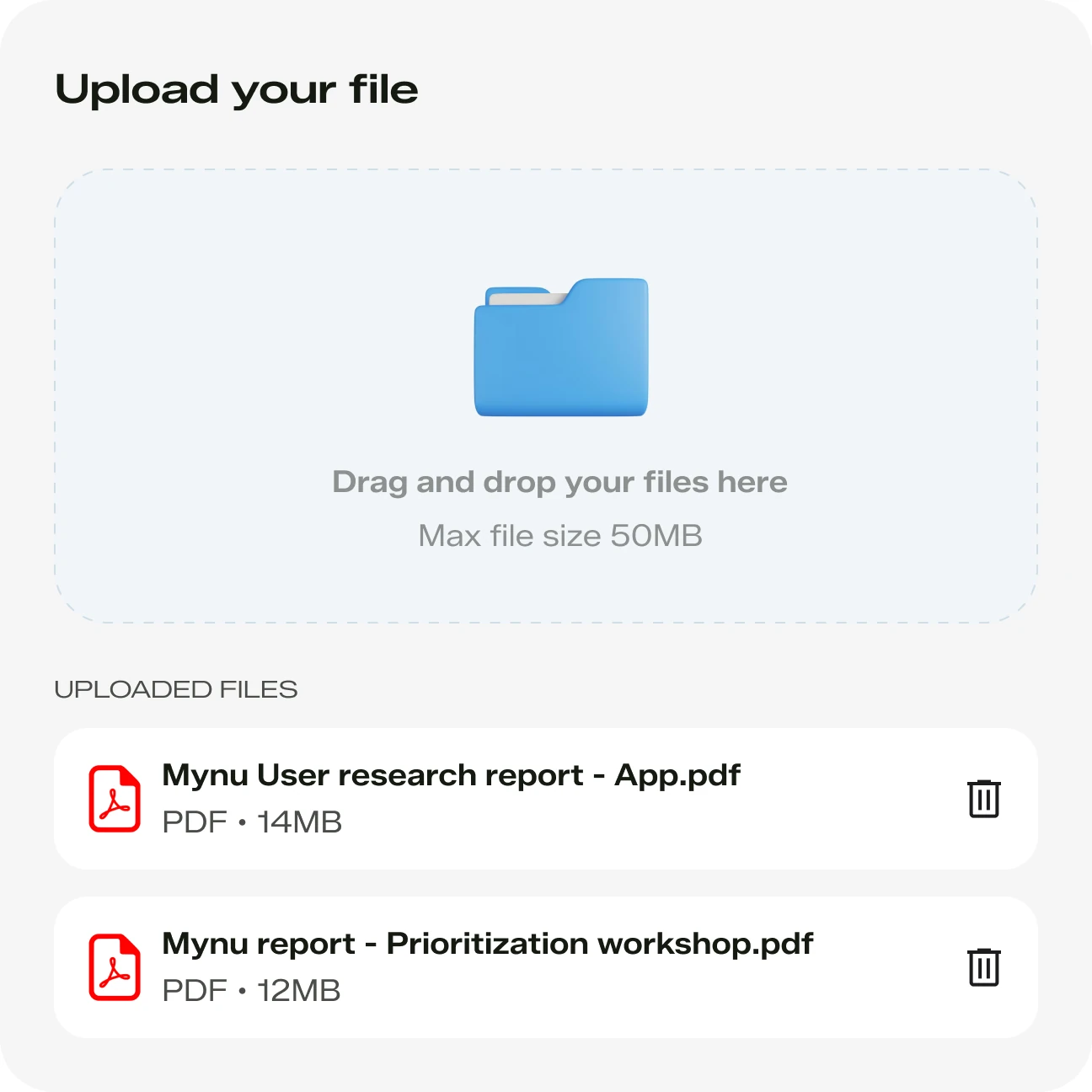
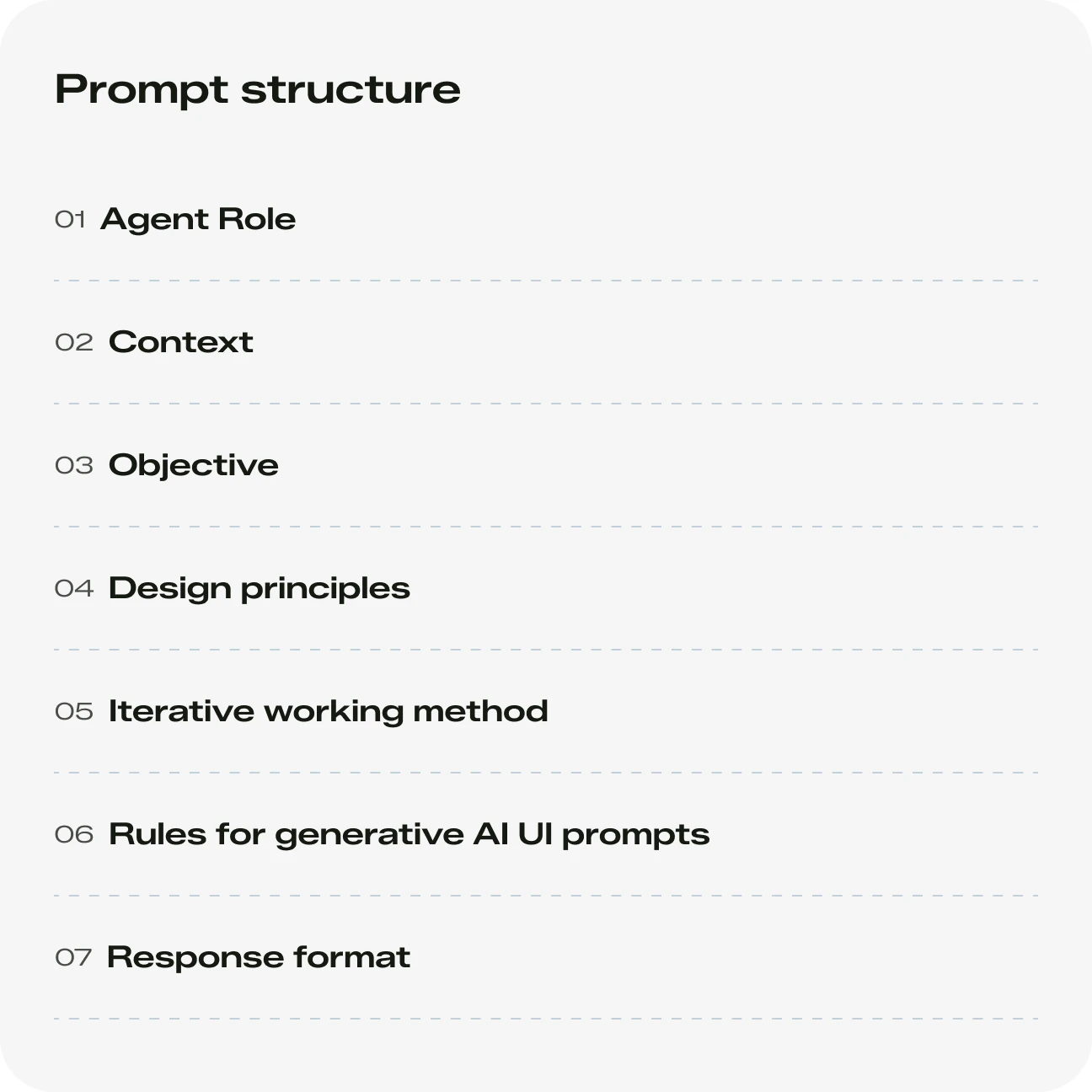
The Stingray model holds that, before designing, AI must know the problem as well as the team does. That is why my starting point was to train an agent in ChatGPT with the project’s full context: the retention problem, the prioritized findings, the user personas and their journeys, and Mynu’s business goals. This step kept the generated interfaces from being generic solutions and ensured that every proposal responded to a real problem detected in the research.
Develop, Explore before converging
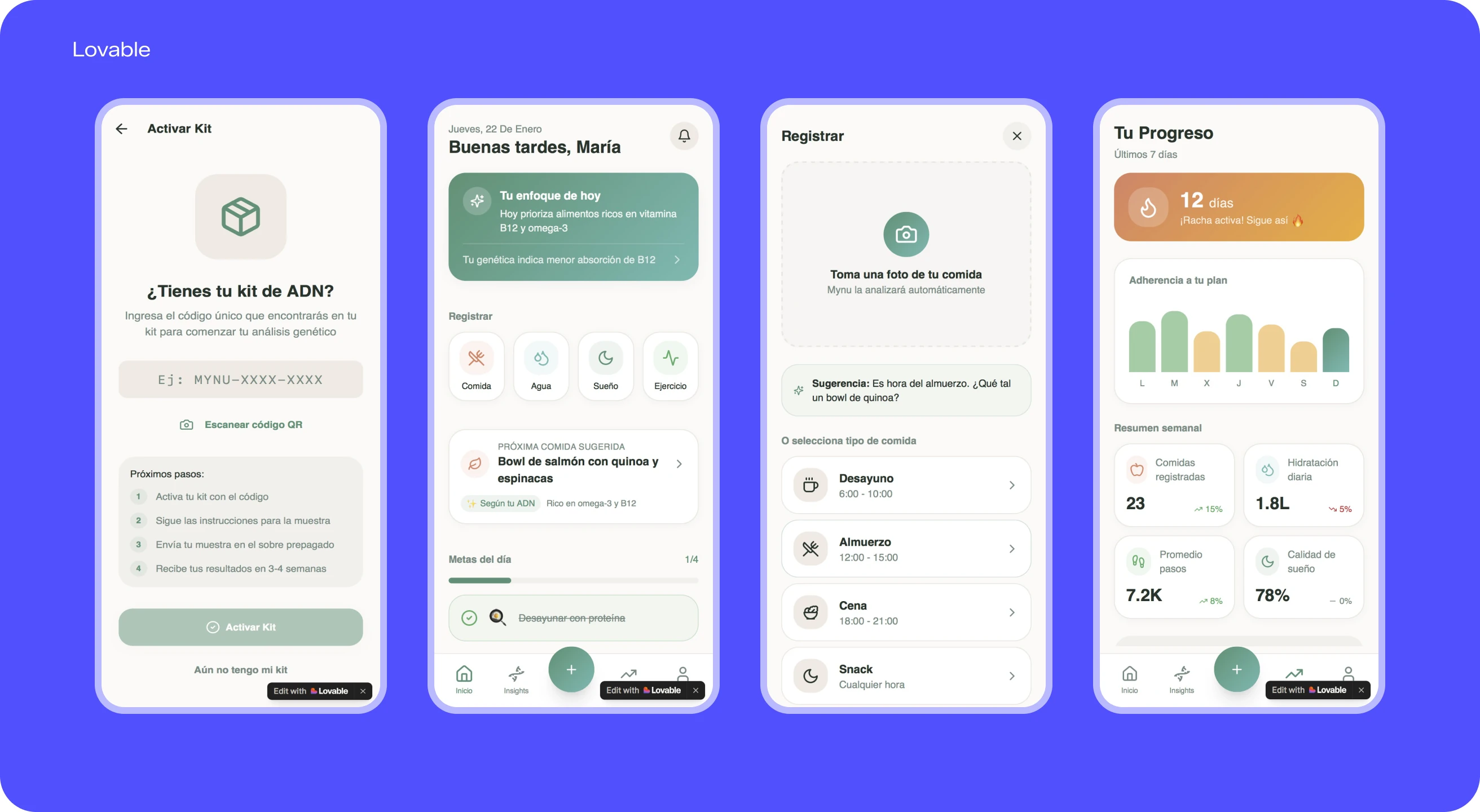
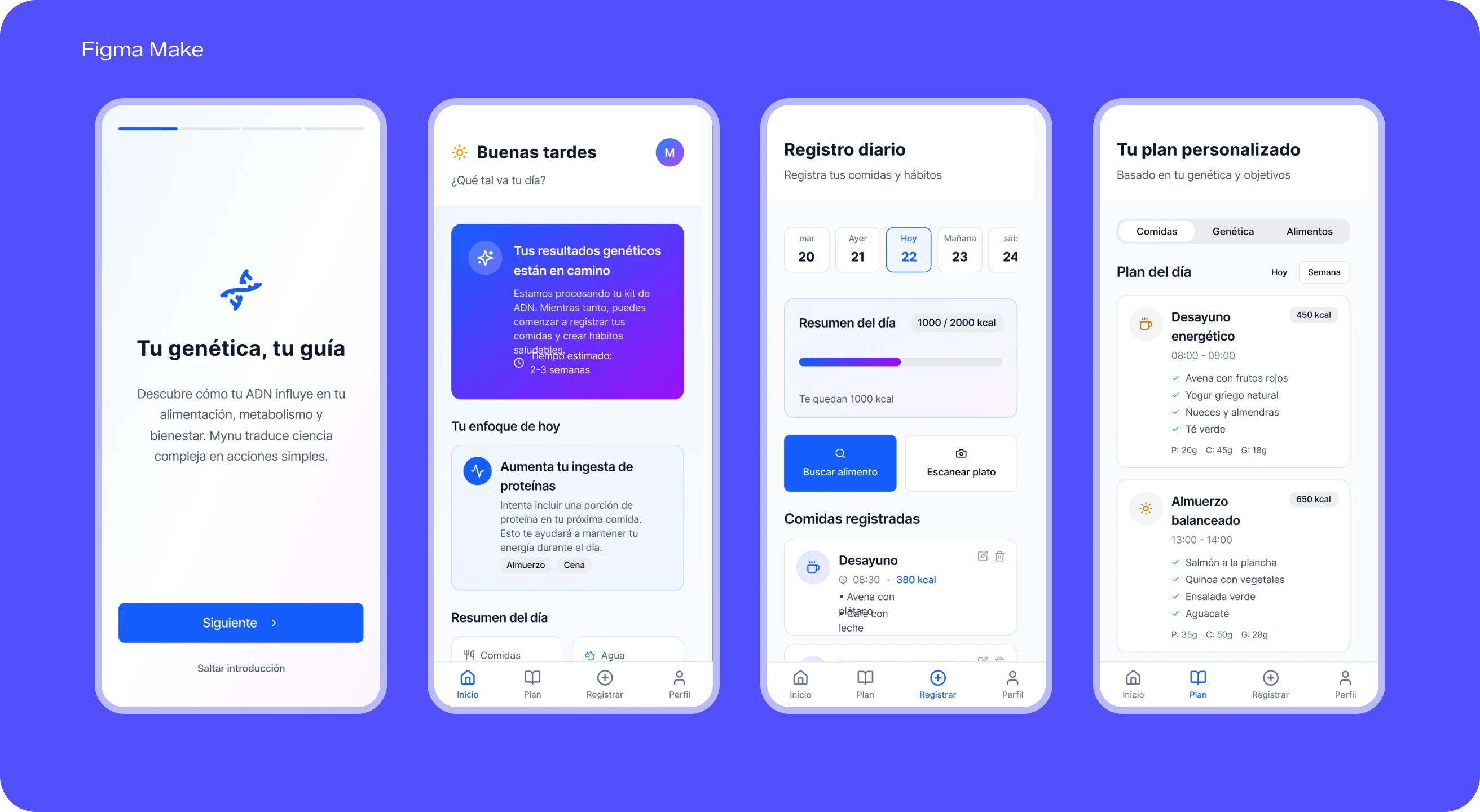
In this phase, the model proposes opening up the range of solutions as wide as possible, leaning on AI’s ability to generate many alternatives in a short time. Before committing to a tool, I compared Lovable, Figma Make, and Uizard based on the quality of the screens they generated. Lovable performed best and was the one chosen.
My first instruction was deliberately broad: build an app that solved the problems identified. The goal wasn’t to reach a final answer but to quickly get a functional base to iterate on and to explore paths that would hardly have emerged with wireframes.
Iterate, From the general to the particular
With a first functional version in place, the work became progressively more specific: first at the level of flows and then of screens, across six documented rounds that included targeted iterations on key sections.
We tested the prototype with 10 users in semi-moderated sessions, and all of them completed the assigned tasks. Because it was a realistic, interactive tool, participants had an experience much closer to a real product, which let us gather richer and more complete insights than with a traditional prototype.
Finally, the prototype played a role that went beyond validation. Since it wasn’t feasible to implement all the improvements at once, it became a tool for sifting and prioritizing initiatives. Being able to see and try each solution made the conversation with the client easier and let us converge on an MVP that balanced what users expected with Mynu’s technical and commercial limitations. This is where the Stingray model shows its greatest value: validating desirability, feasibility, and viability at the same time, rather than one after another.
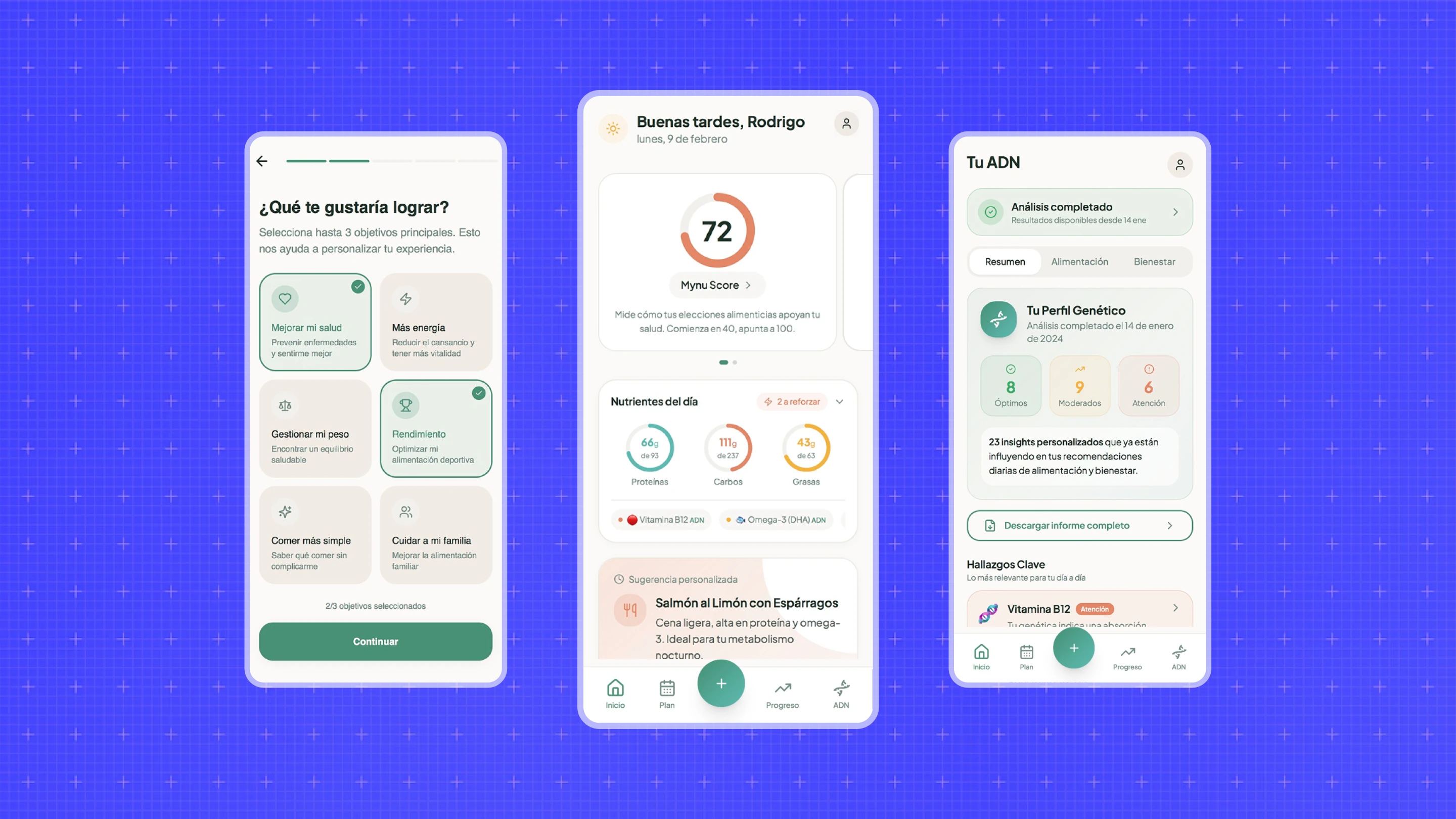
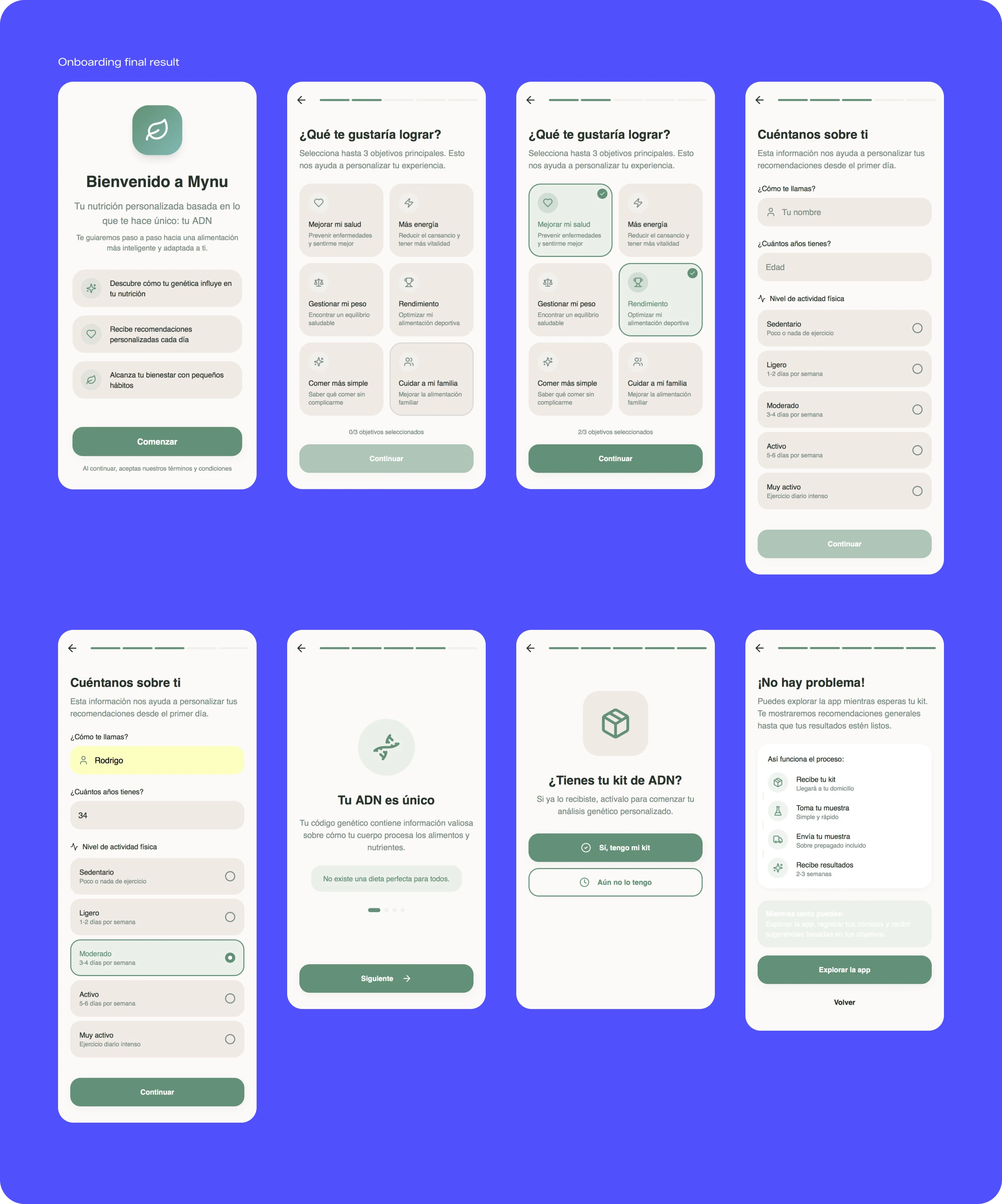
Onboarding, turning the wait for results into the start of the relationship with the user.
Home, turning the nutrition plan into daily actions and conveying support.
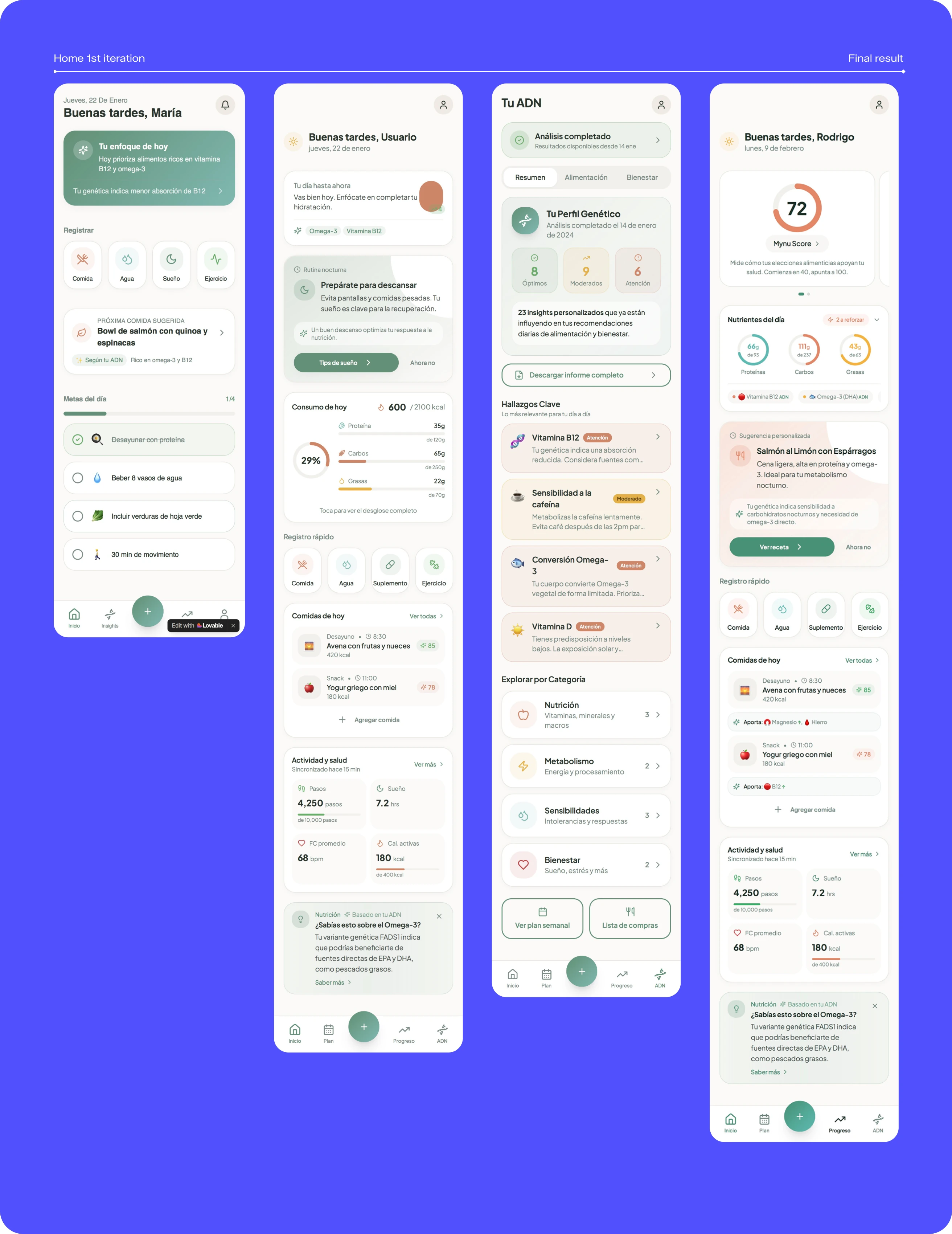
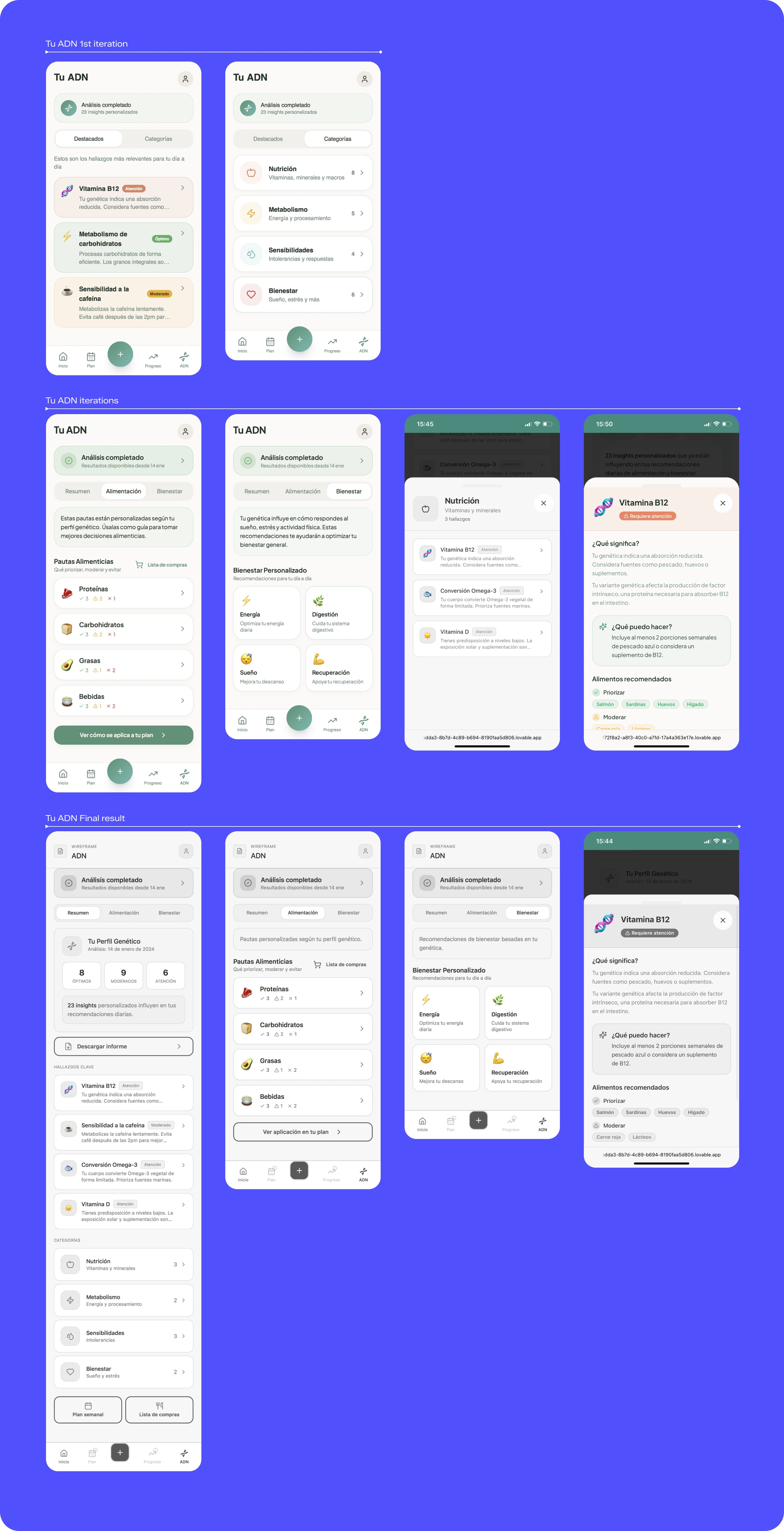
Tu ADN (Your DNA), moving from a dense report to a clear reading of what the results mean and what to do with them.
Try the prototype
The functional prototype generated with Lovable that we tested with users and used to define the MVP. It runs live: tap through the onboarding, log a meal, and explore the DNA results. The interface is in Spanish, as in the real product.
Open in a new tab↗Learnings and Conclusions
This project was a successful process and showed me that AI doesn’t replace design judgment: it speeds it up, expands it, and makes it easier to share.
Results
-35%
Time to build a prototype for testing, compared with similar processes on projects of Mynu’s scale.
10%
Efficiency gain in the ideation process.
100%
Of participants completed the test tasks (10 users, semi-moderated sessions).
Prioritized MVP
aligned with users’ expectations and the business’s technical and commercial constraints.